
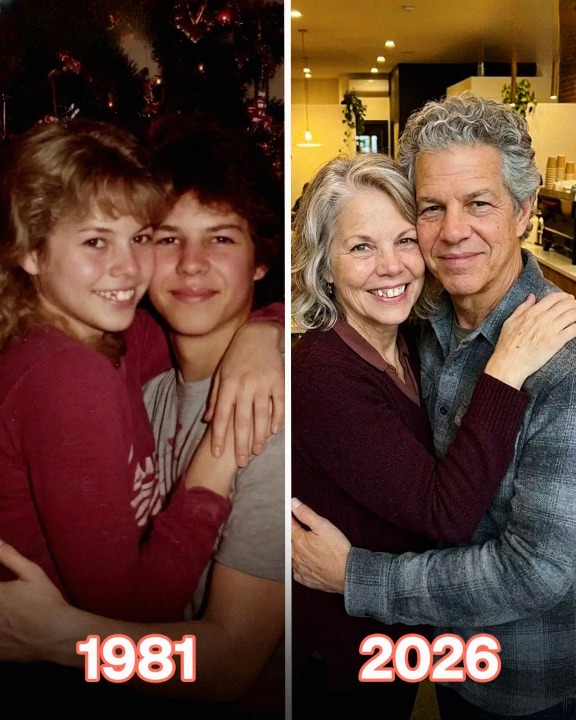
I’m a 62-year-old literature teacher, and I thought December would be just another routine month—until a student’s holiday interview question unearthed a story I’d kept buried for decades. A week later, she rushed into my classroom with her phone, and everything changed.
I’ve been teaching high school literature for almost forty years. My life follows a predictable rhythm: hall duty, Shakespeare lessons, lukewarm tea, and essays that seem to multiply overnight. Every December, before winter break, I assign the same project: “Interview an older adult about their most meaningful holiday memory.”
The students groan, complain, and then return with stories that remind me why I love teaching.
This year, quiet Emily waited after class. “Miss Anne?” she asked, holding her assignment sheet. “Can I interview you? I want to interview you.”
I laughed. “Honey, my holiday memories are boring. Ask your grandma or a neighbor—anyone interesting.”
She didn’t flinch. “I want to interview you. Because you make stories feel real.”
Something about that touched me. “Fine. Tomorrow after school. But if you ask about fruitcake, I’ll rant.” She smiled. “Deal.”
The next day, she sat across from me in the empty classroom, notebook open, feet swinging. She began with easy questions: my mom’s terrible fruitcake, my dad blasting carols, the year the Christmas tree leaned like it was giving up.
Then she hesitated. “Can I ask something more personal?”
“Within reason,” I said.
She took a breath. “Did you ever have a love story around Christmas? Someone special?”
That question reopened a wound I’d carried for decades.
His name was Daniel—Dan.
We were seventeen, inseparable, and fearless in the way only teenagers can be. Two kids from difficult families, dreaming as though the world belonged to us. He promised California, sunrises, the ocean—just us. Then his family vanished overnight after a financial scandal. No explanation. No goodbye. Just gone.
I shared the sanitized version with Emily. “I loved someone when I was seventeen. Then he disappeared. I moved on… eventually.”
She listened silently, carefully writing everything down.
A week later, Emily burst into my classroom, phone in hand. “Miss Anne, I think I found him.”
I laughed nervously. “Emily, there are a million Daniels.”
She showed me a local forum post: “Searching for the girl I loved 40 years ago.” There I was, seventeen, in a blue coat with a chipped tooth, laughing with Dan’s arm around me.
Emily asked, “Do you want me to message him?”
I froze, then nodded. “Yes. Message him.”
Saturday arrived. I dressed carefully—not to look younger, but to present the best version of myself. At the café, the scent of espresso and cinnamon filled the air. And then I saw him.
Dan. Older, lined with age, silver hair—but his eyes were unchanged: warm, attentive, mischievous.
“Annie,” he said. That name hadn’t been spoken in decades.
“Dan,” I replied.
We started with small talk, catching up. Then the silence I’d carried for forty years settled between us.
“Why did you disappear?” I asked softly.
Ashamed, he explained. His family’s sudden scandal forced them to leave overnight. He wrote me a letter but was too afraid I’d blame him. He waited to build a clean life before trying to find me again.
He pulled from his coat pocket my long-lost locket with my parents’ photo, the one I’d mourned since senior year. He had kept it safe, waiting to return it.
We sat quietly, hands brushing over the locket, the world moving around us.
Finally, he asked, “Will you give us a chance? Not to redo seventeen, but to see what’s left now?”
“Yes,” I said. My heart raced.
On Monday, I found Emily at her locker. “Well?” she asked.
“It worked,” I said. “Thank you.”
I stood there, 62, with my old locket in my pocket and a new kind of hope in my chest. Not a fairytale, not a do-over—just a door I thought would never open. And now, for the first time in decades, I wanted to step through it.