
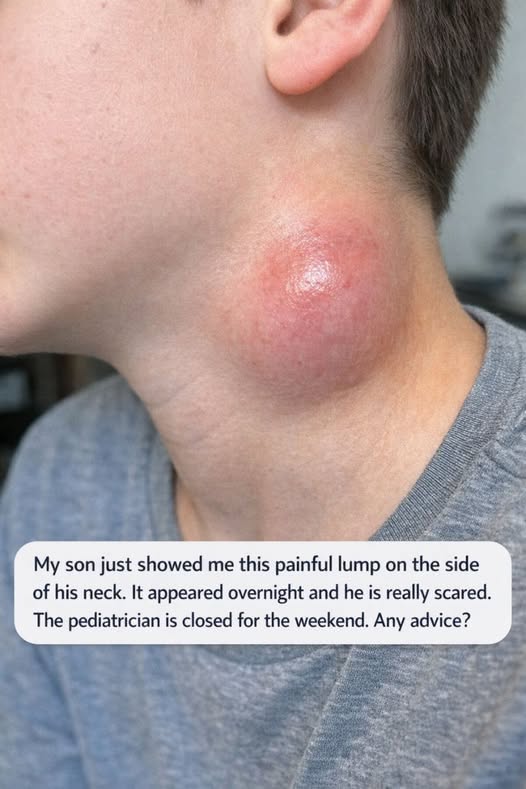
Discovering a sudden, unexplained lump on your child’s neck can be deeply alarming, especially when it appears overnight and seems to come out of nowhere. In those first moments, it’s easy for panic to set in, with the mind jumping to worst-case scenarios—something that only feels worse if it happens after hours or over a weekend when your pediatrician isn’t available. The result is often a mix of fear, confusion, and helplessness while waiting for professional guidance.
Even though the initial reaction is usually intense worry, it’s important to pause and regain calm before responding. In many cases, neck lumps in children are harmless and linked to common, temporary causes. Most are not medical emergencies. Helping your child stay calm, speaking gently, and offering reassurance can make the situation less frightening for both of you.
A key reason these lumps appear is the immune system’s normal activity. The neck contains lymph nodes, which help filter out infections. When a child has a mild cold, sore throat, or minor infection, these lymph nodes can swell as they work to fight it off. This swelling can feel like a lump under the skin and is often tender, but it usually signals that the body is doing its job correctly rather than something dangerous.
When checking the area, it should be done gently and without causing discomfort. Comparing both sides of the neck can help you notice differences. Small, soft, movable lumps that are mildly sensitive are often associated with routine infections, especially if the child otherwise feels well, is active, eating normally, and shows no signs of illness. In many of these cases, it is safe to monitor the situation and wait for a scheduled medical appointment while keeping an eye on any changes.
However, there are warning signs that require urgent medical attention. If your child has difficulty breathing or swallowing, drooling, a rapidly growing lump, very high fever, severe pain, or a hard, fixed lump that does not move under the skin, immediate medical care is necessary. These symptoms should not be ignored and warrant an emergency evaluation.
While observing at home, comfort care can help. A warm compress may ease tenderness, and keeping your child hydrated and well-rested supports recovery. If needed, appropriate pain or fever relief can be given according to medical or pharmacy guidance. It is important not to press, squeeze, or attempt to treat the lump physically, as this can worsen the situation or cause irritation. Unverified home remedies should also be avoided.
If uncertainty remains, contacting a healthcare provider, nurse hotline, or urgent care service can provide reassurance and direction. Seeking help early is always appropriate when it comes to a child’s health.
Although finding a sudden lump can be distressing, most cases are not serious and improve with time. Staying calm, observing carefully, and knowing when to seek medical care helps ensure your child’s safety while reducing unnecessary panic.