
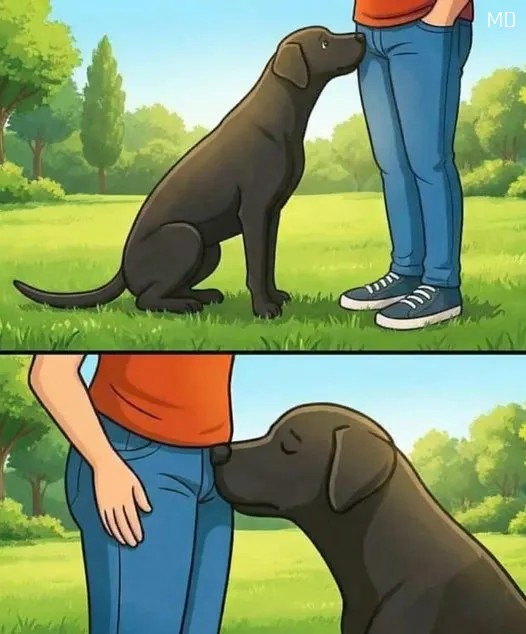
Being a responsible and caring dog owner involves much more than just meeting basic needs like food, water, and shelter. It is about understanding how dogs perceive the world and how they communicate. Dogs experience life primarily through their sense of smell, which is far more developed than that of humans. This powerful ability helps them recognize people, explore their environment, and form bonds based on scent rather than sight. When owners understand this, they can build a calmer and more trusting relationship with their pets.
Why dogs sniff people
One behavior that can sometimes feel awkward to humans is when dogs sniff people in very personal or unexpected areas. While it may seem inappropriate from a human point of view, for dogs it is completely natural. Their sense of smell is extremely advanced, with hundreds of millions of scent receptors, allowing them to detect details humans cannot perceive. Through scent, dogs gather information about identity, familiarity, and even emotional state. What feels uncomfortable to us is simply a normal form of greeting and information gathering for them.
Scent as communication
Dogs do not rely on spoken language the way humans do, so smell becomes their main form of communication. Sniffing helps them recognize individuals, detect changes, and understand their surroundings. When owners see this behavior as curiosity rather than misbehavior, it becomes easier to respond calmly and appropriately. This understanding reduces tension and helps create smoother interactions between dogs and people.
How dogs read chemical signals
A major reason for this behavior lies in pheromones—natural chemical signals produced by the body. Dogs can pick up information from these signals, including emotional changes and physical states. They may detect stress, excitement, or fear through hormone levels in sweat and scent. This is also why dogs may prefer certain people over others; they are responding to the information carried in their scent.
Dogs also have a specialized structure that allows them to analyze these signals more deeply, giving them a detailed understanding of the person they are interacting with. This ability helps them quickly assess familiarity, mood, and safety.
Training and boundaries
While sniffing is natural, dogs still need guidance on how to behave in social situations. Consistent training and positive reinforcement help them learn when and how to greet people appropriately. Teaching simple commands and rewarding calm behavior encourages better manners without suppressing natural instincts.
Building better habits
With patience and consistency, owners can redirect overly intrusive behavior into more controlled greetings. For example, guiding a dog to sit or focus on a toy can help them stay calm when meeting guests. Over time, this creates a balance where the dog’s natural curiosity is respected while still maintaining comfort for people.
Understanding your dog’s world
When owners learn to see the world from their dog’s perspective, everyday interactions become easier and more meaningful. Sniffing is not misbehavior—it is communication. By understanding and guiding it, owners strengthen trust and create a healthier bond with their pets, built on patience, respect, and mutual understanding.