
The morning air was cool and fresh, filled with the scent of wet moss and decaying wood as my son Leo and I set out into the depths of an old forest. It was meant to be a simple weekend walk—an escape from the noise of the city and a chance to enjoy nature in peace. Above us, thick green branches formed a dense canopy that scattered sunlight into soft, shifting patterns across the forest floor.
We had been walking for about an hour along a narrow, uneven trail winding between tall, ancient pines. Leo, only seven and bursting with energy, kept wandering off to examine rocks, fallen branches, and small insects. Everything felt calm and ordinary—a quiet bonding moment between father and son.
Then, suddenly, everything changed.
Leo froze ahead of me, completely still. I watched the color drain from his face as he slowly stepped back and grabbed my sleeve, his hand shaking. His eyes were wide with fear as he looked toward something near the base of a large oak tree.
My heart immediately tightened as I followed his gaze.
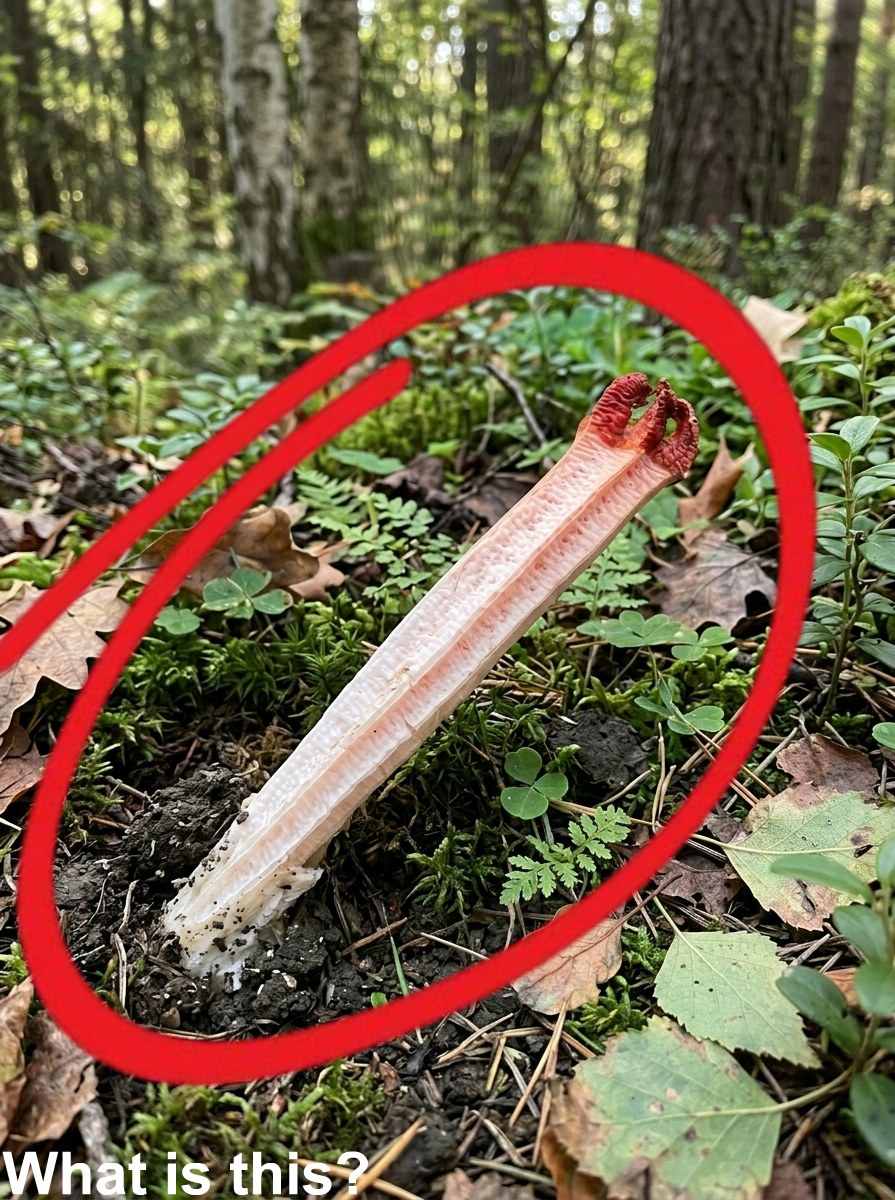
From the dark soil and scattered leaves, something shocking appeared to be emerging—something that looked disturbingly like a human hand. It had red, finger-like shapes curling upward, glossy and strange, almost as if it were reaching out of the ground. The sight was so unsettling that my first instinct was pure alarm.
As we got closer, a faint, unpleasant odor drifted through the air, resembling decay. My mind raced through worst-case scenarios, and instinctively I pulled Leo slightly behind me, trying to stay calm while my pulse spiked.
For a moment, everything felt wrong about the forest—the silence, the stillness, the way it seemed to hold its breath around us.
Still uneasy, I pulled out my phone and searched for answers, trying to make sense of what we were seeing: a red, hand-like fungus, something resembling a strange mushroom growing from the ground.
The results came quickly—and completely changed everything.
What we had found was not something dangerous or horrific, but a rare fungus known as Clathrus archeri, commonly called “devil’s fingers” or “octopus stinkhorn.” Its bizarre shape and unsettling color are part of its natural life cycle. It even produces a scent that mimics decay to attract insects that help spread its spores.
The fear I had felt moments earlier quickly turned into relief—and then fascination. I laughed in disbelief, telling Leo it wasn’t a monster at all, just an unusual mushroom.
His fear faded into curiosity, and together we knelt down to study it, amazed at how something so strange could be completely natural.
When we finally continued our walk, the forest felt different—no longer frightening, but full of hidden wonders. Still, I couldn’t stop thinking about what we had seen. It was a powerful reminder that nature is full of surprises, capable of turning an ordinary walk into a moment you’ll never forget.