
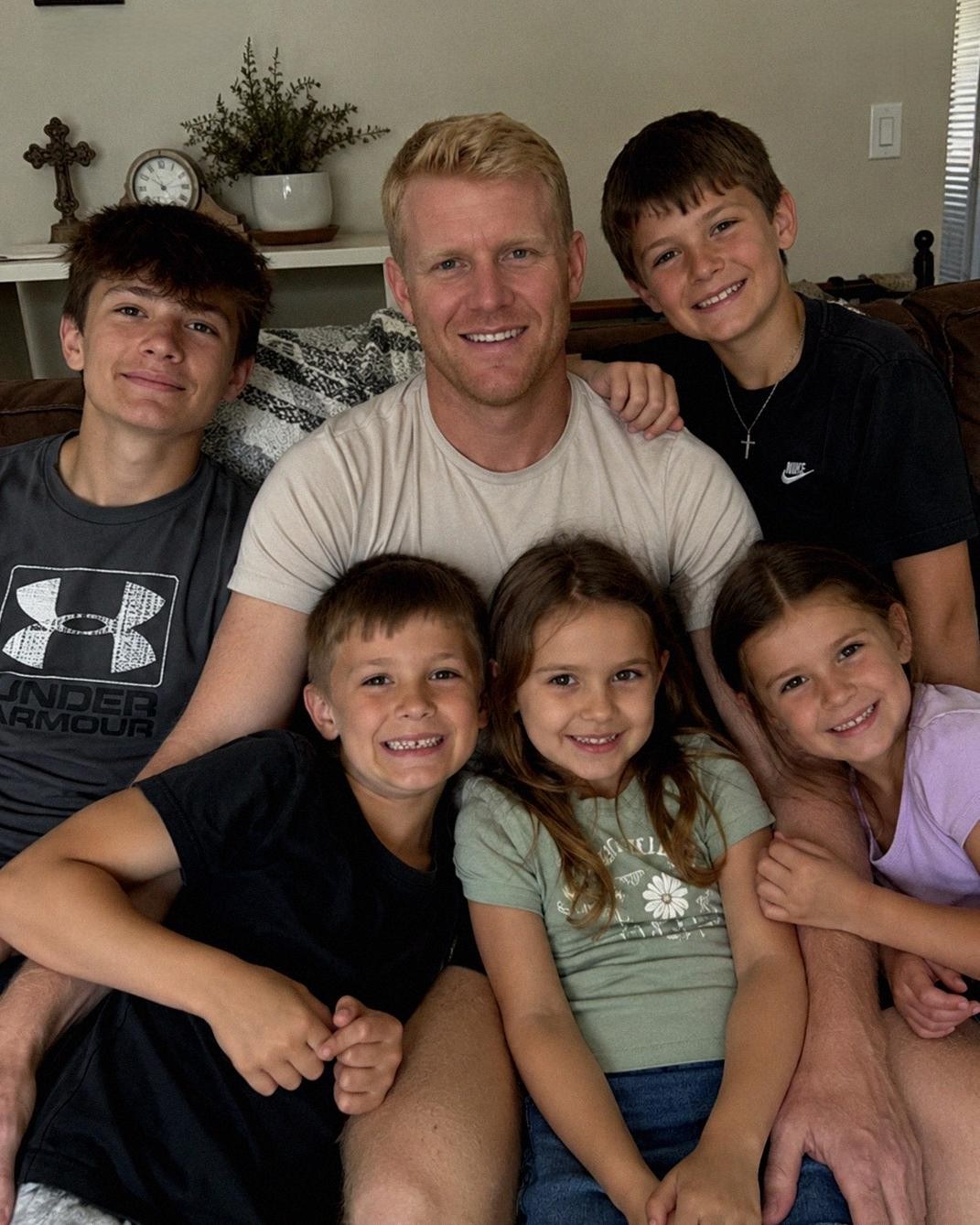
I left the doctor’s office with one devastating sentence looping through my mind: I was biologically incapable of being the father of my five children. My life, which had always felt stable and full, was suddenly reduced to confusion and fear after what should have been a routine medical check-up. By the next day, I found myself hiding outside my own kitchen, shaking as I recorded my wife and my brother speaking in hushed tones about a truth I was convinced would obliterate everything I knew.
Our home had always been loud, warm, and chaotic in the best way. Five kids filled every corner of the house with noise and energy, while Sarah, my wife of fifteen years, kept everything together with a calm strength I never questioned. I left that morning like any other—kissing her goodbye, joking with the kids, stepping out into a life I thought I understood completely. I didn’t realize I was walking straight into something that would turn that certainty upside down.
The doctor’s appointment had been meant to address minor fatigue, nothing serious. Instead, Dr. Patel sat me down with an uneasy expression and delivered results I wasn’t prepared for. A rare genetic condition, he said—sterility from birth, with absolutely no possibility that I could have naturally fathered children. I actually laughed at first, because it sounded impossible. I even showed him pictures of my kids, trying to prove him wrong, but his expression didn’t change. He looked at me with quiet pity, as if my life had just split into two irreversible timelines.
I left the clinic in shock, unable to process what I’d heard. If it were true, then everything about my family had to be questioned. I couldn’t go home, so I went to my brother Mark—the one person who had always been there for me, especially after the transplant he helped me survive years ago. I broke down in front of him, repeating what the doctor said. His reaction was strange: pale, tense, and overly quick to dismiss it as a mistake. He urged me to leave, promising to look into it, but something about his urgency unsettled me.
That unease grew into suspicion. The next day, I went home but didn’t go inside right away. Instead, I slipped through the back and hid near the patio when I heard voices inside the kitchen—Sarah and Mark. They were emotional, talking about how the truth was never meant to come out like this, and how I couldn’t find out this way. My heart raced as I secretly recorded them, convinced I was about to hear confirmation of betrayal.
Later, alone in my car, I listened to the recording expecting the worst. But what I heard completely changed everything. There was no affair, no deception about my children. Instead, it was a catastrophic medical misunderstanding. Because of my past transplant and the genetic material involved, my blood results had been misinterpreted. The sterility markers didn’t belong to me in the way the doctor assumed, and the conclusion I had been given was simply wrong.
The truth was far simpler—and far more overwhelming. I had panicked over an error. My wife hadn’t betrayed me, my brother hadn’t lied, and my children were mine in every way that mattered.
When I finally walked back into the house, everything I had feared unraveled in an instant. Sarah and Mark stood there exhausted and emotional, but not guilty. I pulled them into an embrace, overwhelmed by guilt for the conclusions I had drawn. In trying to prepare for betrayal, I had nearly destroyed the trust that had always held us together.
As I held my family and listened to my children playing outside, I understood how quickly fear can distort reality. What I thought was the end of everything turned out to be a reminder that the truth, even when delayed or misunderstood, can still bring you home.