
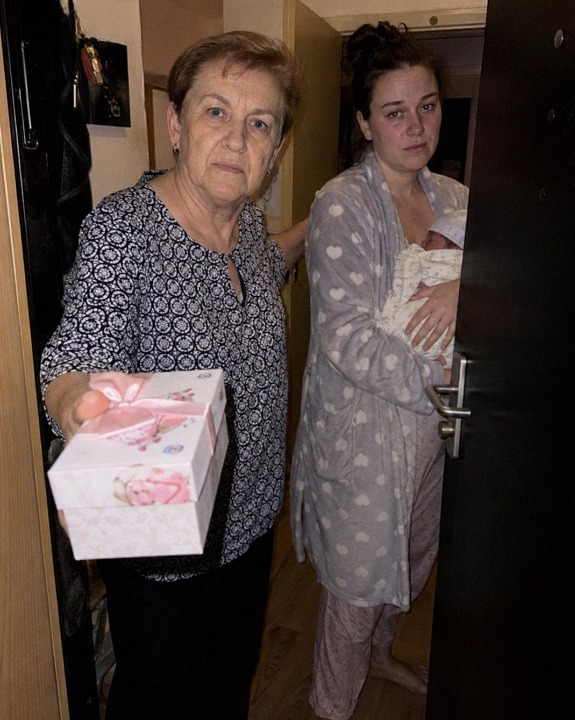
I thought the hardest part of becoming a mother would be the pain, exhaustion, and fear of doing everything wrong. I was wrong. The real shock came when my husband made it clear that our newborn mattered less to him than his car.
I gave birth on a Friday morning, and by that evening I was barely able to stand. Stitched up, weak, holding our baby in a hospital carrier, and just wanting to go home.
But the moment we reached the pickup area, Logan stopped.
He didn’t offer to help with the diaper bag, the paperwork, or even the blanket. He just looked at his spotless car.
Then he said it.
“I’m not putting the baby in my car.”
I thought I misunderstood him at first.
But he wasn’t joking.
He stared at the back seat like it was more important than anything else happening that day. “If she spits up in there, it’s ruined.”
I told him I had just given birth and could barely walk. He told me to call a taxi.
And then he left.
He drove away while I stood outside the hospital holding our daughter, shaking, exhausted, and completely humiliated. A nurse eventually came out, saw me, and helped arrange a ride home.
The taxi ride felt endless. Every bump hurt. I cried the entire way, holding my baby close while trying not to fall apart.
When I finally got home, I could barely carry her inside.
That’s when his grandmother saw me.
She took one look at my face and immediately knew something was wrong. When I told her everything, she didn’t interrupt once.
She just listened.
Then she said quietly, “Don’t apologize for his failure.”
Inside the house, she got me water, made me sit down, and calmly made a few phone calls. No yelling. No drama. Just quiet, deliberate action.
Later that evening, Logan walked in like nothing had happened.
He smiled, proud of himself, like I had simply “managed” without him.
But then he saw his grandmother standing there holding a box.
Everything changed.
Inside were the documents to his car—ownership papers, financing, everything.
His confidence disappeared instantly.
He insisted it was his car.
That’s when she told him the truth: it never fully was. She had co-signed it, helped pay for it, and kept control of the title until he proved he was responsible enough.
Then she showed him the next step.
The car had already been sold.
A dealer had been contacted. A flatbed was already on its way.
And parked outside, waiting in its place, was an old minivan.
Logan lost it. He argued, panicked, demanded answers. But nothing changed.
The deal was done.
The message was clear: if he wanted to stay in that house, he would be driving the van, not the car he valued more than his family.
And he did.
Silence followed.
Later, his grandmother said something that stuck with me: I had just learned who he really was when there were no consequences for his choices.
Because that was the real moment everything shifted—not the sale of the car, not the argument—but the realization that when given the choice, he had left me outside a hospital with our newborn over something replaceable.
That night, when he finally held our daughter, I didn’t feel relief.
I felt clarity.
Because some actions don’t need explanation. They show you everything you need to know.
And once you see it, you can’t unsee it.