
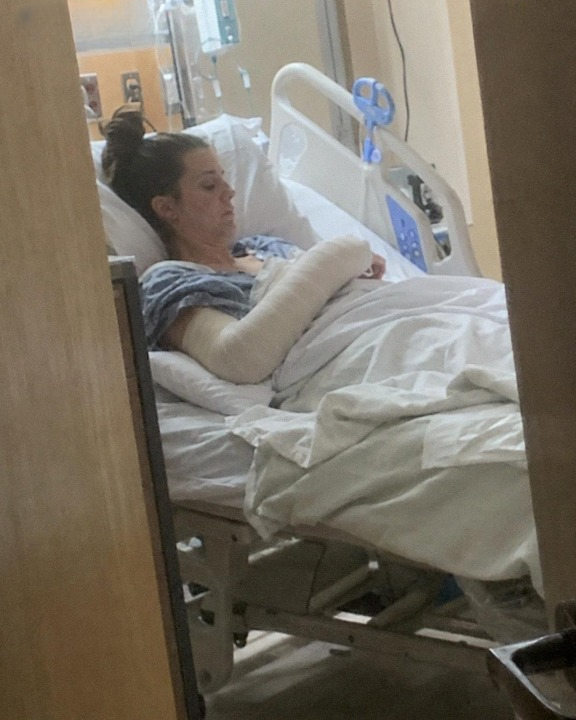
The hospital called me one afternoon and told me my daughter had been admitted with a broken arm. I told them they must have the wrong person—because I buried my daughter thirteen years ago.
But the nurse didn’t back down. She repeated the details, even her name, her medical history, and her emergency contact. Then she said something I couldn’t ignore: the patient had asked for me.
By the time I arrived at the hospital, I was barely holding myself together. At the ER desk, they directed me to Room 4B, saying “Miss Lily” was waiting.
Hearing that name again felt unreal.
Inside the room, a young woman sat with a cast on her arm, holding her chart close. When she turned around, I froze—she looked exactly like my daughter. The same eyes, the same expression, the same face I had grieved for years.
But something was off.
A small detail—a mole she never had—shattered the illusion.
She insisted she was my daughter. She showed me a folder filled with copies of documents: birth records, medical files, and information that matched everything about Lily… even details from the day she supposedly died.
I didn’t know what to believe anymore.
I stayed at the hospital that night, determined to understand what was happening. Staff gave careful, incomplete answers, but one older nurse mentioned something strange—two young women had been involved in a serious accident years ago, and confusion had surrounded their identification.
Back in the room, I went through the folder myself. Inside were repeated notes telling her she was “Lily,” instructions about her allergies, and reminders of a life she said she couldn’t fully remember. It felt like someone had been building her identity from scattered pieces.
When she woke and saw me reading, she became defensive at first—but slowly admitted that her memory wasn’t stable. Some days she knew things clearly, other days everything felt fragmented, like it didn’t belong to her.
That’s when I realized the truth was more complicated than grief or coincidence.
I brought the matter to the hospital administration, demanding answers. After pressure and review, they finally admitted there had been a serious breakdown in identification procedures following the accident.
Back in her room, I told her gently what I had learned: the identity she had been given wasn’t fully real.
She broke down, terrified at the idea that everything she believed about herself might be wrong.
I told her she wasn’t fake—just misidentified, and that we would figure it out together.
The next morning, the doctors arrived with new records.
Her real name wasn’t Lily.
It was Natalie.