
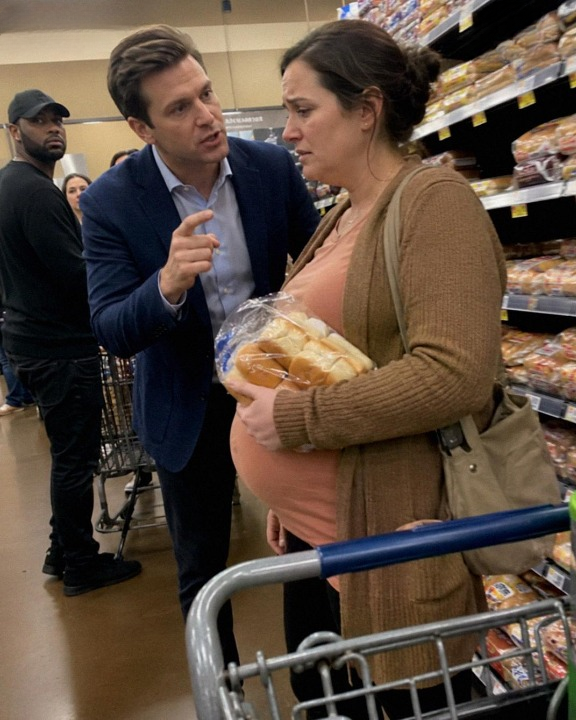
I thought I was building a future with the father of my baby—until a simple grocery store trip revealed the truth, and everything changed in a single moment.
When I found out I was pregnant at 31, I felt hopeful. My boyfriend Jack and I had been together nearly two years, and at first, our relationship seemed steady and full of promise. We talked about baby names, nursery ideas, and the kind of parents we wanted to be. He used to hold my hand in stores and tell me he couldn’t wait to meet a child who looked like me. I believed him.
When I told him I was pregnant, he reacted with surprise, then quickly wrapped me in a hug and said he was ready to be a father. For a while, things felt right.
But slowly, that changed.
Over time, Jack became distant and critical. Small comments turned into constant complaints—about how I cleaned, how I spoke, how I rested. What once felt like love turned into irritation and control. He mocked me over little things, questioned every purchase, and treated money like a weapon during every grocery trip.
I told myself it was stress. Work pressure. The baby on the way. I kept hoping he’d return to the man I first fell in love with.
But he didn’t.
By the time I was seven months pregnant, I barely recognized him anymore. One rainy evening, he insisted we go to the store for milk and dinner supplies. I was exhausted, my body aching, but I went without argument.
Inside the store, his mood turned sharp almost immediately. He rushed me through the aisles, complaining that I took too long. Then, in the bakery section, I picked up a pack of $3 whole-grain buns. That’s when he snapped—loudly humiliating me in front of other shoppers over something so small.
He accused me of wasting money, mocked me for being “careless,” and raised his voice so everyone could hear. When I asked him to stop, he only got worse, suggesting I had trapped him with the pregnancy.
Trying to steady myself, I placed the buns back—but my hands shook, and the bag fell, spilling across the floor.
Instead of helping, he laughed.
Then, suddenly, his expression changed. His voice cut off mid-laugh. He was staring past me.
A man in a suit had appeared behind us.
Calm, composed, and clearly important, the stranger quietly picked up the scattered buns and looked at Jack with controlled authority. Then he spoke Jack’s name—and revealed he was his boss.
What followed was a quiet but devastating confrontation. The man called out Jack’s behavior, pointing out how publicly humiliating his partner reflected poorly on his professionalism and character. Jack tried to backtrack, but it was too late. His boss wasn’t interested in excuses.
The energy shifted completely. The confidence Jack had moments earlier collapsed into silence.
The stranger then turned to me and asked if I was okay. It was a simple question—but it landed harder than anything I had heard in a long time.
Jack stormed out of the store humiliated, and I was left standing there, shaken but suddenly seeing everything more clearly than ever.
That night, something inside me broke open. When we got home, I told him to leave. I couldn’t raise a child in an environment filled with disrespect and cruelty.
He left.
Two months later, I gave birth to my daughter. Jack never came back, never called, never asked. And strangely, I felt relief more than grief.
I was ready to raise my baby alone—until I ran into the same man again at the grocery store months later.
He remembered me immediately.
His name was Cole.
What began as chance encounters turned into conversations, then friendship, then something deeper. He helped me navigate legal steps for child support, stood by me through paperwork and court, and never once treated me like a burden. He treated me like a person who deserved respect.
Over time, he became part of my life—and my daughter’s.
He didn’t rush anything. He simply stayed.
Eventually, what started in a grocery aisle turned into something I never expected: stability, kindness, and a second chance at love.
And one day, in our living room while my daughter played on the floor, he asked if he could stay—for both of us.
I said yes.
Looking back, it’s strange how everything changed over a pack of $3 buns. But really, it wasn’t about the bread. It was about the moment I finally saw the truth—and the moment someone else did too.
Sometimes life doesn’t fall apart.
It redirects you.
And sometimes, the person who helps you pick up the groceries is the same one who helps you rebuild your life.