
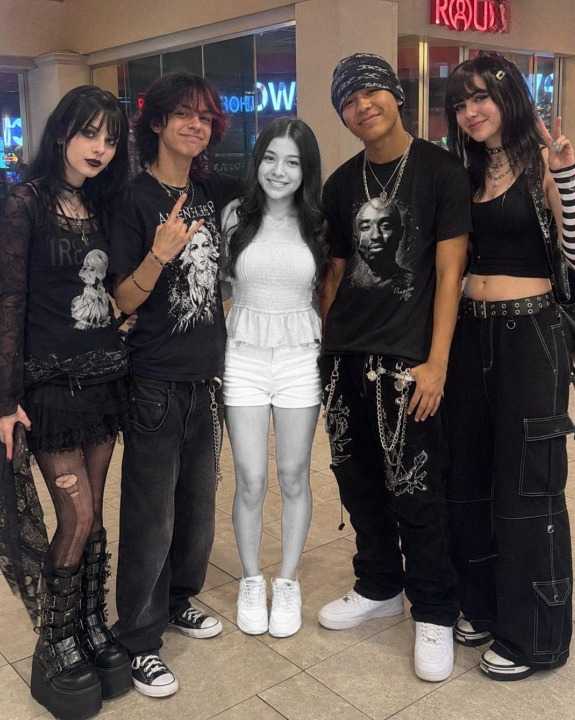
The day I returned home after burying my daughter, I found her friends inside my house and assumed they had crossed another boundary in my grief. Instead, they led me into the living room and revealed something about my child I had never fully understood while she was alive.
In the days after Angelica’s death, I was consumed by guilt, anger, and endless questions. She was only 16, taken in a tragic accident while riding her bike. When I was first told, it felt unreal—just flashing lights, an officer’s voice, and an address I drove to in shock.
At the scene, her bicycle lay twisted near the road, and her friends stood nearby, shaken and devastated, repeating that they had tried to help. In my grief, I looked at them and saw pain mixed with helplessness, but also the last people who had been with her. I pushed them away the following day, unable to face what I was feeling.
Before we moved towns, Angelica had been gentle, thoughtful, and full of quiet warmth. She was my closest companion as much as my daughter. But after the move, everything changed. She struggled with loneliness and found new friends who were not bad influences, just restless teenagers exploring life in their own way. I often wondered if things would have been different had we stayed where we were.
Her funeral passed in a haze, and when I returned home, I expected emptiness. Instead, my house was lit up, the door open, and her friends standing inside among the flowers and reminders of her absence.
Anger took over immediately. I demanded to know how they had gotten in, but they told me Angelica had shown them where the spare key was hidden. I told them to leave, convinced they had no right to be there after everything.
Then one of them said quietly that they were there because of Angelica’s last request.
Confused and shaken, I followed them into the living room—and what I saw stopped me completely.
They had brought back something I thought was lost forever: Benji, our family dog, the one Angelica had never stopped searching for after he disappeared during our move.
As I held him, the truth slowly began to unfold. Her friends showed me videos and messages Angelica had left behind—proof that she had been secretly searching for him, planning a surprise return for me. She hadn’t told me because she was afraid of failing.
Through their efforts, they had continued her search after her death, eventually finding him in a shelter and bringing him home.
In that moment, my anger began to dissolve into something heavier—understanding. I realized I had mistaken their presence in her life for a negative influence, when in reality they had been standing beside her in ways I never fully saw.
As memories resurfaced—of Angelica’s love for Benji, of our family before loss, and of the bond we shared—it became clear that her final effort had not been random. It had been an act of love, meant to restore something precious to the family she left behind.
The next day, I took Benji back to the mountains she had once dreamed of visiting again. Her friends came with me. In their company, I finally spoke the truth: I had blamed them out of pain, not understanding.
We stood together, united by grief and memory, watching the dog she loved run freely in the wind. In that shared silence, I began to see that grief does not belong to one person alone.
Angelica was gone, but she had left behind something enduring—not just memories, but connections, healing, and a way for all of us to find each other again in the aftermath of loss.