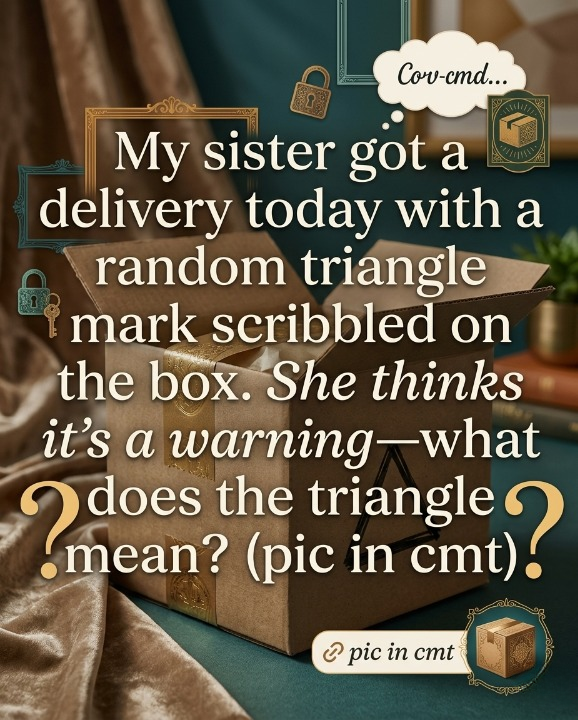
In today’s world of fast, everyday deliveries, receiving a package has become routine. Most people barely think twice before grabbing a box from the porch and opening it. But sometimes, a small unusual detail—like a hand-drawn triangle on the packaging—can suddenly feel unsettling and spark confusion or worry.
Human beings are naturally wired to notice patterns and spot anything that seems out of place. Because of this, an unexpected symbol on a package can quickly trigger curiosity and concern. In an age where social media is full of warnings about hidden “codes” or signals supposedly used by criminals, it’s easy for imagination to turn a simple mark into something suspicious.
However, most of these fears come more from online rumors than reality. In truth, delivery systems are fast-paced, high-pressure environments where workers handle hundreds of parcels in a single shift. To keep things organized and efficient, some drivers and warehouse staff use quick, informal markings as personal reminders or sorting aids.
A triangle on a box is usually nothing more than a practical note—something used to identify a package within a route, highlight a stop order, or make it easier to locate among many others. These marks are not directed at the customer and have nothing to do with warnings or threats. They are simply part of the behind-the-scenes effort to manage large volumes of deliveries efficiently.
The misunderstanding often comes from the fact that customers rarely see the human side of logistics. We are used to smooth, automated systems, so when we notice handwritten marks or symbols, they can feel unusual or even suspicious. In reality, they are just small traces of the workers trying to keep everything moving on time.
When viewed in context, the “mystery triangle” is not a warning at all, but a simple tool used for organization in a busy delivery system. It reflects the human effort behind modern convenience rather than anything dangerous or secretive.