
It began with a simple, heartfelt act from my six-year-old son, Oliver. One evening, he noticed our elderly neighbor, Mrs. Adele, had been sitting in complete darkness for days. Without hesitation, he emptied his piggy bank—every birthday coin, tooth fairy dollar, and saved allowance—and insisted we use it to help pay her overdue electricity bill.
I thought that was the end of it: a quiet moment of kindness on a dark porch.
I was wrong.
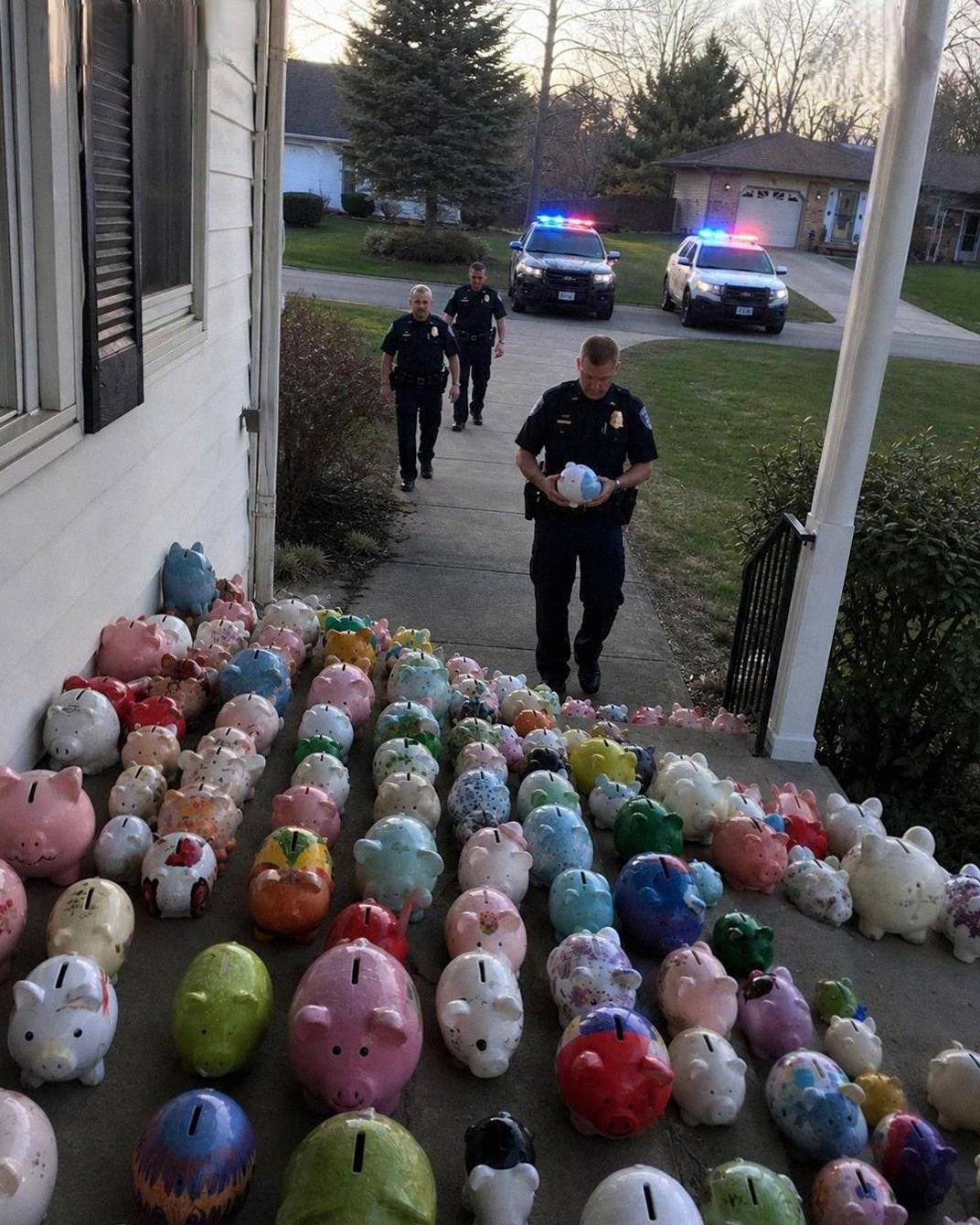
The next morning, I woke to loud knocking at the door and stepped into a scene that made no sense at all—police cars lined the street, and our entire front yard was covered in piggy banks of every color and size.
On the porch stood Officer Hayes, holding a red ceramic piggy bank. Behind him, the lawn was practically buried in them.
My son stood behind me in his pajamas, terrified he had done something wrong. But the officer quickly reassured us—no one was in trouble. In fact, Oliver had done something most people had failed to do: he had noticed someone quietly slipping through the cracks.
Hayes asked me to break open the red piggy bank.
What followed was a revelation none of us expected.
Inside weren’t coins, but folded notes, keys, gift cards, and messages from dozens of people in the community. Each one told a story of Mrs. Adele—how she had quietly helped them years ago when they were children, often without anyone ever knowing.
A grocery store owner wrote about how she had fed him when he was in school and struggling. A contractor promised free repairs because she once helped him through a difficult childhood. One by one, neighbors came forward, sharing memories of a woman who had spent her life quietly caring for others.
Even Officer Hayes revealed his own story—how Mrs. Adele had once given him a cafeteria token when he was a starving child, telling him he could repay it someday if he ever needed help. That small act, he said, changed the entire course of his life.
The police weren’t there for a crime. They were there because the entire town had come together to repay a debt of kindness.
We later learned the truth: Mrs. Adele’s nephew had set up her bills incorrectly, and she had been sitting in the dark because no one realized the payments had stopped. She had been too proud to ask for help.
When we spoke with him, the community’s reaction finally made him understand the situation he had overlooked.
That night, as I tucked Oliver into bed, I asked him what Mrs. Adele had whispered to him that first day.
“She said I have your heart,” he murmured, “and to never stop being good.”
Outside, her porch light glowed again.
And I understood something I never had before—sometimes kindness doesn’t just help one person. It wakes up an entire world that forgot how to see it.