
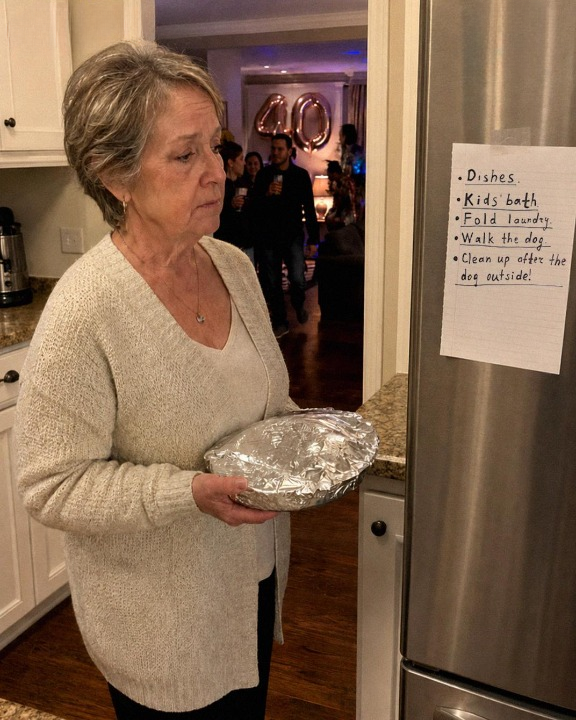
When my estranged son invited me to his birthday dinner, I thought it meant I was finally being welcomed back into his life. I arrived with his favorite homemade pie and a hopeful heart—but once I stepped inside, I realized I had been invited for a very different reason.
Since marrying Vanessa, I’d slowly been pushed to the sidelines. Family time faded, visits became rare, and even my grandchildren felt distant. Still, I held onto his invitation and spent the morning baking for him, believing things might change.
When I arrived, the house was already full of guests. No one greeted me, so I let myself in and found Aaron and Vanessa in the kitchen. I wished him a happy birthday, but the moment felt cold. Vanessa took the pie and pointed to a list on the fridge—chores she expected me to handle so she could host.
I looked to my son, hoping he’d laugh it off. Instead, he told me to help.
For a moment, I almost did what I always had—stay quiet and go along. But something in me shifted. I folded the list and chose to “help” in my own way. I served the pie, greeted guests, and acted like family—not hired help. Soon, people noticed the list, and the tension in the room grew.
Later, in private, the truth came out. Aaron had missed how things used to feel, but hadn’t told Vanessa until the last minute. She admitted she felt compared and overwhelmed, trying to manage everything alone. What started as resentment turned into honesty none of us had faced before.
I left that night, hurt but clear about one thing: I wouldn’t be treated like an outsider in my own family.
A week later, Aaron showed up at my door with apples, asking me to teach him how to bake the pie. He and Vanessa had talked—really talked—and wanted to do better. Soon, she arrived too, with the kids. It was awkward, imperfect, and honest.
We cooked together, made mistakes, and slowly found our way back. Nothing was magically fixed—but for the first time in a long while, I felt like I belonged again.