
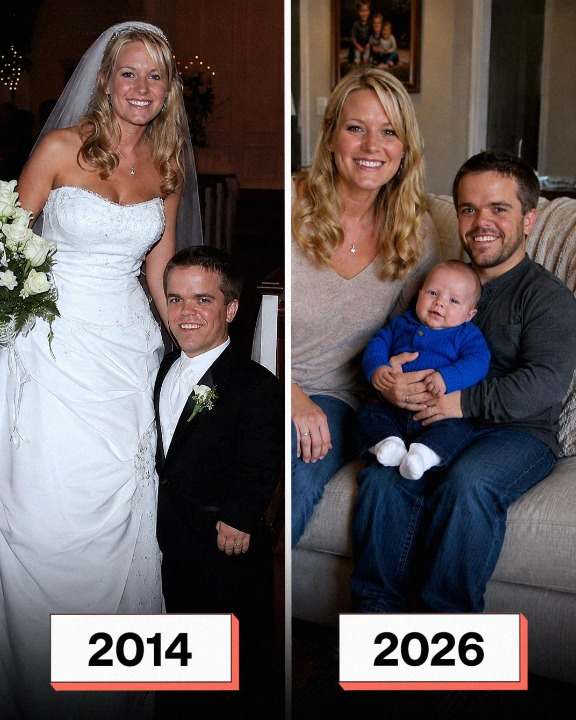
My parents mocked my husband for years—his height, his past, and even humiliated him at our wedding. But when they lost everything and came begging him for $20,000, they suddenly expected forgiveness as if nothing had ever happened. He agreed to help… but only on one condition they never expected.
I’ll never forget the look on my mother’s face at my wedding.
She didn’t look happy. She looked ashamed—deeply, painfully ashamed.
All because my husband, Jordan, was born with achondroplasia. In simple terms, he has dwarfism.
I once overheard my parents calling him a “genetic stain” on the family name.
Walking down the aisle, I thought that would be the worst moment of the day.
I was wrong.
At the reception, my father grabbed the microphone, already laughing.
“To the couple!” he said. “May their children be able to reach the dinner table!”
A few people laughed awkwardly.
I felt my face burn. I wanted to disappear.
But Jordan just squeezed my hand and whispered, “Ignore it.”
“How can I?” I whispered back. “That’s my father.”
“I know,” he said quietly. “But life is easier when you don’t carry every insult.”
I hated how calm he was. Because I knew what it really meant: he was used to it.
Over dinner once, Jordan told them he had grown up in an orphanage after being abandoned by his biological parents. I expected sympathy.
Instead, they exchanged looks and laughed.
“Oh,” my mother said lightly.
My father added, “Well… I think we can guess why.”
My stomach dropped. “Are you serious right now?”
“It’s just a joke,” my father said. “He can take it, right?”
“Stop,” I snapped. “Just stop.”
Silence fell across the table.
That was the moment I realized they would never accept him. To them, he would always be a joke.
So I slowly pulled away from my parents. Fewer calls. Fewer visits. Every interaction came with another insult wrapped in a smile.
Jordan never reacted. He just kept building his life—quietly, steadily, becoming successful on his own terms.
Then everything changed.
My parents’ business collapsed.
I didn’t know how bad things were until they showed up at our door—smaller, older, desperate.
And suddenly very polite.
They didn’t come to apologize.
They came asking for help.
“Jordan,” my mother said carefully, “we heard your firm landed a major contract…”
“We just need $20,000,” my father added. “To keep the bank from taking our condo.”
I was ready to throw them out.
But Jordan stepped in first.
“Come in,” he said calmly. “Let’s talk.”
They sat for nearly two hours, explaining their situation. Not once did they say sorry.
When they were done, Jordan stood up, went into his office, and returned with a check.
$20,000.
My mother’s eyes lit up immediately.
But Jordan held it back.
“You can have this,” he said, “but only if you agree to one condition.”
The room changed instantly.
“What condition?” my father asked.
“It’s simple,” Jordan said. “Apologize for how you’ve treated me over the years.”
My father exhaled, almost laughing. “That’s it? Of course. I’m sorry.”
My mother nodded quickly. “We’re sorry if you were hurt—”
“If?” I interrupted.
She paused, then continued. “We didn’t mean it that way. They were jokes.”
And suddenly, twelve years of cruelty were being erased in a sentence.
I looked at Jordan holding the check.
And I couldn’t let it happen.
I reached over and took it from him.
“No,” I said.
All eyes turned to me.
“You don’t get to humiliate him for twelve years and fix it in twelve seconds,” I said.
My father bristled. “We apologized.”
“No,” I said. “You rushed through words you didn’t mean just to get what you want.”
“We’re trying here,” my mother snapped.
My father turned to Jordan. “You’re really going to let her do this?”
Jordan didn’t hesitate. “We make decisions together. If she’s not satisfied, I trust her judgment.”
Then he looked at me. “You decide.”
Something shifted.
For the first time in years, they weren’t in control.
“Fine,” I said. “If you want help, you earn it.”
My father scoffed. “Earn it? We’re your parents.”
“And you’ve spent years mocking him,” I said. “So you’ll spend one week at his firm.”
My mother blinked. “Doing what?”
“Watching. Listening. Learning.”
My father frowned. “We’re not doing that.”
“You won’t be working,” I said. “You’ll just see what it’s like to be ‘different’ in a room where everyone notices it.”
Jordan added quietly, “My firm is built on inclusion. People with disabilities, including dwarfism, work there and thrive.”
My father scoffed. “This is ridiculous.”
“Then leave,” I said.
The word that finally broke everything came next.
“Circus,” my father muttered.
Not a joke this time. Not softened. Just the truth he’d always hidden.
That was enough.
I stood up. “Leave.”
And this time, they did.
The door closed behind them with a quiet finality.
Silence filled the house.
“That wasn’t what I expected,” I said.
Jordan looked at me. “No. But it was right.”
And for the first time in a long time, I felt something settle inside me—clear, steady, and real.
The check still lay on the table.
Neither of us touched it.