
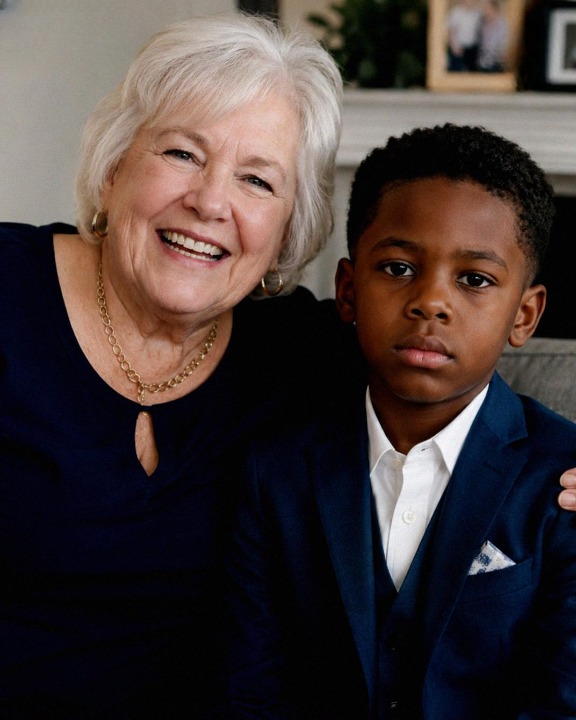
The first time my son begged me never to leave him alone with my mother, I heard a level of fear no child should ever have to carry. By the end of that day, I realized I hadn’t brought help into my home — I had invited back the same kind of cruelty I thought I’d escaped.
My mother has always been controlling. Even now, at 34, I still find myself instinctively seeking her approval as if I were still a teenager. She has opinions about everything — my work, my appearance, my parenting, even how I should live my life. Especially the fact that I’m raising my son alone after my divorce.
My ex-husband, Darren, left when Noah was five. One day he simply said he “couldn’t do it anymore,” as if he were quitting something trivial. Weeks later, he was gone with someone else, leaving behind only occasional messages, inconsistent support, and distance.
Noah struggled more than he let on. He was eight when everything settled into a new normal, and I told myself he was adjusting.
Because of my job as a respiratory therapist, I sometimes relied on my mother to watch him after school. She insisted it was natural — she was his grandmother, after all.
I didn’t see her as dangerous. Just strict. Overbearing. Someone who believed discipline meant control.
Then Noah started changing.
At first it was small — silence when she was mentioned, reluctance to talk about his day, tension when her car pulled into the driveway. I tried to rationalize it. Not every child bonds easily with every grandparent.
But one night, everything shifted.
As I tucked him into bed, he suddenly grabbed my wrist and whispered, terrified:
“Mom… please don’t leave me alone with Grandma anymore.”
My stomach dropped.
When I asked why, he kept insisting I wouldn’t believe him. That I’d think he was lying. That she was “different” when I wasn’t there.
I barely slept that night. I told myself it must be discipline, misunderstandings, nothing serious.
But the fear in his eyes stayed with me.
The next day, I confronted my mother. She dismissed it immediately.
“He’s dramatic,” she said. “I just make him behave.”
When I pushed, she grew sharper. Said I was too soft. That I always turned discipline into tragedy.
And for a moment — horrifyingly — I almost believed her.
But I remembered Noah’s grip on my wrist. I remembered his voice shaking.
So I installed hidden cameras.
The next time she came over, I left for work like normal. She smiled and assured me everything was fine.
Noah didn’t hug me goodbye.
That night, I watched the footage.
At first, nothing seemed wrong. Homework. Routine conversation. Then, the moment I left the house, her entire expression changed.
Her warmth disappeared.
She told him, “Now we can stop pretending.”
What followed was not discipline. It was cruelty — deliberate, sustained, and targeted.
She humiliated him, insulted him, called him weak, told him his father left because of him, and reduced him to tears while forcing him to continue his homework as she circled him like a shadow.
There were no bruises. No obvious signs. Just words designed to break him down.
By the time I reached the worst moment — her telling him he ruined his father’s life — I had to stop the video.
I went straight to him.
He was in bed, quiet, waiting.
When I told him I believed him, he broke down completely. And I realized then that he had been trying to survive something alone, thinking no one would ever protect him.
That night, I called my mother back to my house and showed her everything.
She didn’t deny it.
She justified it.
Said she was “toughening him up.” Said I was too soft. Said he needed structure.
And suddenly I understood something I had spent my whole life avoiding: she hadn’t just been strict with him — she had been like this with me too.
The same dismissals. The same control. The same rewriting of cruelty as care.
Something in me snapped clear.
I told her to leave.
When she refused to accept it, I ended contact that night.
No more visits. No more access. No more excuses.
Then I sat with my son and told him the truth:
He was safe. It wasn’t his fault. And what she did was wrong.
We started therapy. Slowly, painfully, he began to heal — though fear lingered in small ways, in questions about forgiveness, in anxiety around authority, in silence where trust used to be.
And I started healing too.
I stopped excusing behavior that harmed him. I stopped confusing family with safety.
One night, he asked me quietly if anyone had ever protected me the way I was protecting him now.
I told him no.
And he said, simply, “I’m glad you do it for me.”
My mother still tries to reach out sometimes. I don’t respond.
Because I finally understand something I should have known much earlier:
Being family doesn’t make someone safe.
And protecting my child matters more than protecting anyone’s image of themselves.