
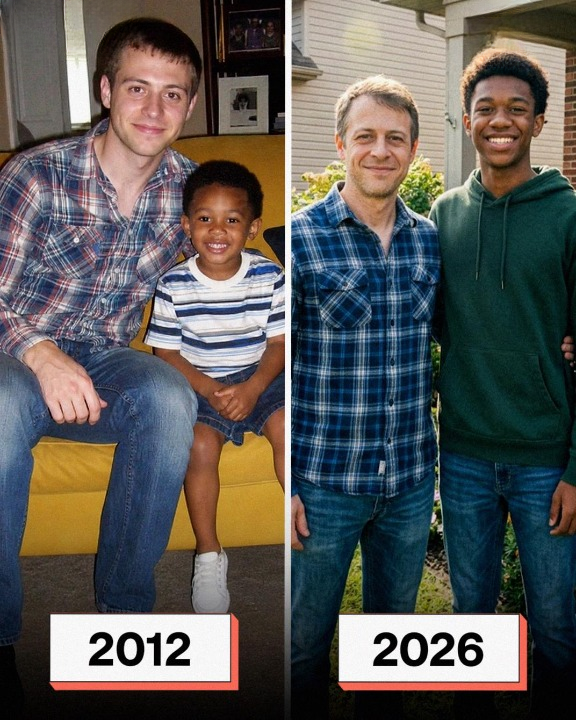
I raised my best friend’s son as my own, telling myself for years that love didn’t always need titles or promises. But everything I believed about our life changed on his 18th birthday, when he handed me an envelope in his mother’s handwriting and said he had waited years to give it to me.
I met Laura when we were 19. She had a way of making life feel easier just by being in it—lighter, less overwhelming. We were close friends long before I understood I loved her. By then, she already had a baby boy, Jimmy, and no one else stepping up in his life. So I stayed.
I was there when Jimmy was born, when he was sick, when he was learning to talk and turning everyday chaos into childhood. I helped however I could—food, errands, sleepless nights, quiet support when Laura was overwhelmed. It became my role: the steady presence in their lives.
I never confessed my feelings. I never crossed that line.
One night, everything changed. Laura was gone after an accident, and suddenly Jimmy—only four years old—was in my arms asking where his mother was. There was no one else to take him. No clear guardianship plan. No father stepping forward. So I became his legal guardian, then his full-time parent in everything but name.
Years passed like that. School runs, homework, scraped knees, birthdays. Questions about Laura came and went until they slowly stopped. I learned how to raise a child while carrying grief that wasn’t mine alone.
I never called myself his father. Just the person who stayed.
Then Jimmy turned 18.
He was taller than me now, quiet in a different way. On his birthday, I walked into the kitchen and found him holding an envelope.
It was Laura’s handwriting.
He told me he’d found it in boxes stored in the attic, left behind years ago. Inside were letters—one for him, and one for me—written before she died.
My hands shook as I opened mine.
Laura wrote that she had trusted me more than anyone. That she had once loved me too, but never said it. That she had arranged legal plans so Jimmy would end up with me if anything happened to her, because she believed I would keep him safe.
Jimmy’s letter was different. It explained that Laura had left him messages for every stage of his life, and that he was only allowed to give me my letter on his 18th birthday.
But there was more.
He also handed me adoption papers—filled out and completed by him—asking for me to officially become his father.
He told me it wasn’t out of obligation. It was his choice.
We went through the attic together after that and found boxes of Laura’s things: photos, baby items, and letters for every milestone Jimmy would reach without her. She had planned for him, for us, far more carefully than I ever knew.
In one of those letters, she wrote that family isn’t always about blood or names—it’s about who stays when everything falls apart.
We later visited the attorney she had spoken to years ago. He confirmed she had tried to formalize guardianship plans, choosing me specifically as Jimmy’s caregiver. Even if the paperwork hadn’t been fully completed, her intentions were clear.
The next day, we finalized the adoption.
Not because Jimmy owed me anything. Not because I asked. But because he wanted it.
When it was done, he finally called me what I had never dared to expect.
“Dad.”
And for the first time, it felt like the word had always belonged to us.