
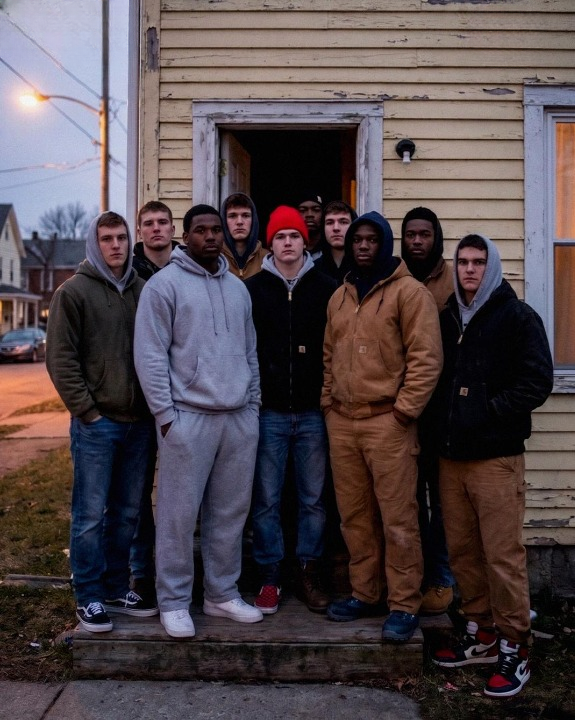
She returned from her grandson’s funeral expecting an empty house and unbearable silence. Instead, she unlocked her door and found ten neighborhood boys inside her living room, as if they belonged there.
She is 81, and after losing her husband Walter and her daughter Eileen in the same tragic accident years ago, she believed there was no one left to lose. Only her grandson Calvin remained.
Every Sunday, he came home to her like clockwork—full of life, always hungry, always talking, always fixing something around the house before settling into his grandfather’s old chair. He was 17, kind in a way that drew people in without effort, and he filled her quiet home with noise, laughter, and warmth.
Then, suddenly, he was gone too—collapsed during a basketball game at school.
At his funeral, she heard story after story about how he had helped others, never let anyone sit alone, and somehow carried people who were struggling. She returned home afterward feeling like everything she loved had been taken from her.
But when she arrived, something was wrong.
Her front door was damaged. The frame was cracked, as if someone had tried to break in. Inside, she expected emptiness.
Instead, she found ten boys moving through her house.
Some were cleaning, others repairing, others carrying groceries. Paint cans, tools, and food were scattered across the kitchen and living room. For a moment, she thought she was dreaming.
When she confronted them, one of the older boys explained carefully—they had known Calvin. He had given them her address and told them that if anything ever happened to him, they were to make sure she wasn’t left alone.
At first, she couldn’t understand it. But then they began to explain who her grandson had been to them: a mentor, a protector, someone who fed them, helped them with school, drove them to safety, and never judged them when others did.
They hadn’t broken in to harm her house.
They had come to fix it.
To care for it.
To care for her.
In the days that followed, they kept returning—repairing what was broken, bringing food, helping with chores, slowly filling the empty spaces Calvin had once occupied. They weren’t a gang, as people assumed. They were boys who had been drifting until Calvin gave them direction.
And now they had chosen to continue what he started.
Eventually, her home became full again—not just of noise, but of life. Sunday dinners returned, now shared with boys who ate like family. Arguments about basketball filled the rooms Calvin once filled alone.
Then one night, one of the boys was badly injured in a street attack. In anger, some of them wanted revenge.
But she stopped them.
Not with fear—but with grief, love, and authority earned through loss. She reminded them that Calvin hadn’t saved them so they could destroy themselves in return.
And they listened.
Healing didn’t come easily. It never does. But they chose another path.
And over time, her house—once emptied by loss—became full again in a different way.
She had believed she had buried everyone she loved.
But Calvin had left something behind she never expected: a group of boys who would refuse to let her be alone.
And in the end, she realized he hadn’t truly left her.
He had simply made sure she was still cared for.