
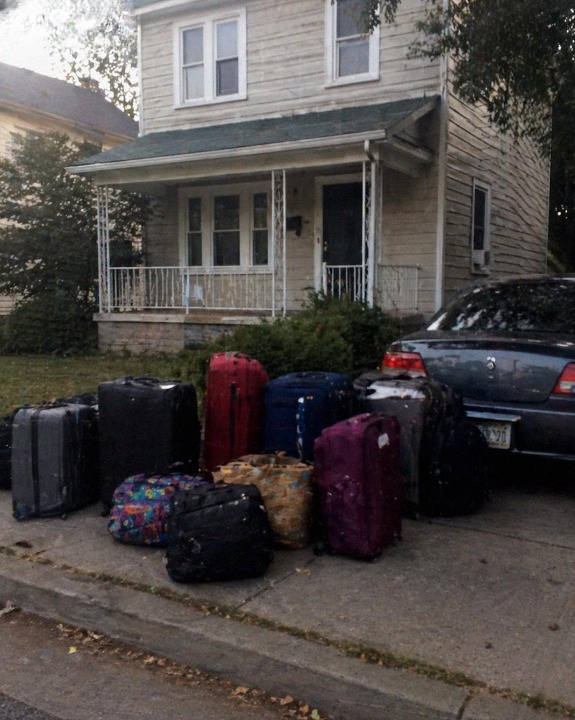
She believed grief had already taken the worst of what she loved. Then a drive past her childhood home revealed a new blow: a “SOLD” sign planted in the yard. But the woman who tried to erase her connection to that house had overlooked a small, hidden detail buried in the past.
I grew up in that house.
Every room held pieces of my mother—her routines, her voice in the kitchen, the quiet way she existed in the space like it could never forget her. Even years later, I could still feel her there in small, ordinary things: sunlight on the floor, the sound of her chair, the smell of familiar meals.
That house wasn’t just property to me. It was what remained of her.
After my mother died, my father remarried. My stepmother, Caroline, never came in loudly or cruelly. Instead, she changed things slowly—small adjustments that gradually replaced memory with something more polished and unfamiliar. Curtains were switched, objects moved, rooms subtly reshaped.
My father called it practicality. I called it erosion, but I was young, and I stayed quiet too often.
Still, I believed the house itself would remain untouched. It had history. It had weight.
When my father died, everything shifted.
Grief returned, but so did uncertainty—this time with no parent left to anchor what came next. I tried to stay involved in decisions about the estate, but I was reassured that things were “being handled together.”
They weren’t.
One day, I drove past the house and froze.
A “SOLD” sign stood on the lawn.
The home I thought would always remain tied to my family had already been listed and transferred without my knowledge. When I confronted my stepmother, she dismissed it as already finalized—something done and irreversible.
But something about that didn’t sit right.
Standing there, I suddenly remembered something my mother once said—that some things are written down for a reason.
That memory pushed me to search through old records, documents, and boxes from my father’s study. Hours later, buried deep in legal files, I found an envelope in my mother’s handwriting.
Inside was a legal agreement I had never seen.
My mother had anticipated this.
She had arranged a protective clause tied to the house—one that required my consent for any sale after I reached adulthood. It had been carefully recorded, quietly preserved, and easily overlooked by anyone who only checked the most recent paperwork.
But it was still valid.
I contacted the lawyer who had handled it years ago.
He confirmed what I had found: the sale could not legally proceed without my involvement. The transfer that had already taken place was incomplete at best—and challengeable at worst.
From that moment on, everything changed.
Notices were issued. The transaction was frozen. The buyers withdrew. And suddenly, the certainty my stepmother had relied on began to fall apart.
When she called, she was furious and panicked, insisting it was already done.
But it wasn’t.
And for the first time, she realized she no longer controlled the outcome.
The sale collapsed. The legal authority she thought she had was no longer enough. What she had treated as a simple transaction was now something far more complicated—and far less in her favor.
And I didn’t lose the house.
Because my mother had already made sure I wouldn’t be erased from it.
When I finally walked through the front door again, nothing had changed physically. But everything felt different.
Not empty. Not lost.
Still there.
Because the house had never stopped belonging to me in the ways that mattered most.
My stepmother forgot one detail.
But my mother never did.