
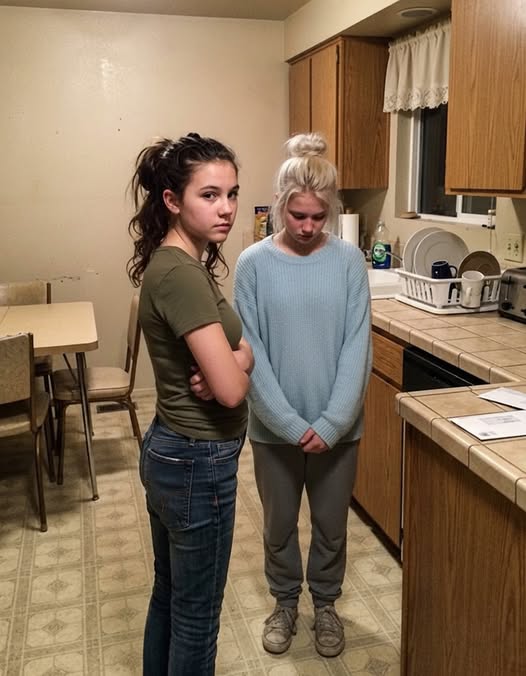
When my daughter brought a quiet, hungry classmate home for dinner, I thought it would just mean stretching another meal a little thinner. I didn’t realize it would change how I understood “enough”—or what our family was capable of giving.
I’ve always believed hard work should eventually add up to stability: enough food, enough comfort, enough love to go around. But at our house, “enough” often felt like a constant negotiation with the grocery bill and our finances.
Tuesday nights were usually simple—rice, a bit of chicken, and whatever vegetables we could stretch across several meals. I was already planning leftovers before dinner was even finished.
My husband, Dan, came in tired from work and asked if dinner was ready. Our daughter Sam was quiet, absorbed in her own world. Everything felt ordinary—until Sam walked in with a girl I didn’t recognize.
She was small, withdrawn, and clearly uncomfortable. Sam announced she’d be eating with us as if it had already been decided.
The girl—Lizie—barely spoke. She ate carefully, almost cautiously, as if unsure she was allowed to take too much. Something about her made my chest tighten.
Dan tried to make conversation, but she stayed shy and guarded. Still, there was something gentle in her presence—like she was trying very hard not to be a burden.
After dinner, Sam insisted she take food home too. That’s when I first started to understand this wasn’t just a one-time visit.
When the door closed behind her, I told Sam we couldn’t just keep bringing people home. We were already stretched thin. But Sam told me the truth—Lizie wasn’t okay. She wasn’t eating properly, sometimes didn’t have power at home, and had even fainted at school.
My frustration faded quickly.
The next day, I cooked extra, and Lizie came back. Then again after that. She slowly became part of our routine—quiet dinners, homework at the table, and small moments of comfort she didn’t seem used to.
But one afternoon, everything changed.
Her backpack fell open, spilling papers across the floor—overdue bills, shutoff notices, and even a list titled like a survival plan. It was clear things at home were far worse than we’d been told.
When we finally spoke to her father, he was exhausted, overwhelmed, and trying desperately to hold everything together on his own. He hadn’t meant to hide the truth—he was just ashamed of it.
From there, things shifted.
We reached out for help: the school, local services, and a food pantry. Slowly, support systems started to step in. The pressure on Lizie and her father began to ease, little by little.
It wasn’t instant or perfect, but it was progress.
Lizie started spending more time with us. She laughed more. Studied with Sam. Helped in the kitchen. She stopped looking like she was constantly bracing for something to go wrong.
And one evening, she told me something I won’t forget—that she used to be afraid to come into our home, but now it felt safe.
After she left that night, I stood in my kitchen and realized something simple but important: we hadn’t fixed everything, and we still didn’t have much—but we had enough to make space for someone else.
And that, in its own way, changed everything.