
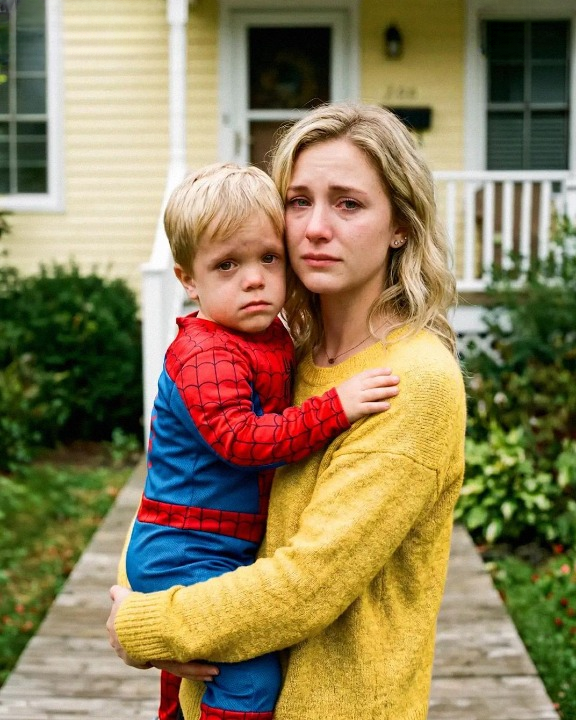
I was 16 when I met a homeless pregnant woman at a community center, and after she passed away, I raised her son as my own. I believed I truly knew him—but years later, my husband uncovered something that completely changed my understanding of him.
I began volunteering at a community outreach center when I was sixteen, mainly to strengthen my college applications. The center, set in an old brick building by the river, provided meals, clothing donations, and prenatal care.
That’s where I met Marisol.
She was different from the others—quiet, careful, and always arriving when the center was nearly empty. She was heavily pregnant, extremely thin, and kept her hair tightly pulled back. She refused shelter help every time, wouldn’t share an address, and only said she slept “near the water.”
She spoke softly, always polite, as if she felt she was an inconvenience just by being there.
Over time, I noticed she never lingered. She would take what she needed, thank us sincerely, and leave.
When her baby was born, she named him Noah.
I remember holding him when he was just a few months old. He was unusually calm, watching everything with an intense, thoughtful gaze, like he was taking the world in too seriously for his age.
When Marisol returned, I said he barely cried.
“He listens,” she replied simply.
She never spoke about her past again.
Child services and staff often tried to help her find stable housing, but she always declined and left with Noah, pushing a stroller with one broken wheel toward the river.
Then one day, everything changed.
A colleague from the center rushed in carrying Noah, crying and shaken. There had been an accident—Marisol had been hit by a car and didn’t survive.
Noah was suddenly left with no one.
He was only a child, clutching his toy truck, asking when his mother would come back.
And I couldn’t answer him.
Within hours, social services arrived and began discussing foster care. Noah clung to my leg and quietly begged not to be sent away.
Something in me broke.
I told him I would do everything I could to keep him safe—even though I was only twenty, broke, and barely managing college and work myself.
But I meant it.
After a long process of paperwork, inspections, and sleepless nights, I adopted Noah when he was five.
He grew into a quiet, responsible child. He never asked for much, never complained, and always tried to be helpful. At ten, I found him repairing his worn-out shoes with tape instead of asking for new ones.
When I asked why he didn’t tell me, he simply said, “They still work.”
I thought it was just him being low-maintenance.
When he was twelve, I married my husband, Caleb, who gradually began noticing things I had overlooked.
Noah never joined clubs, never stayed after school, never asked for anything extra. When asked what he wanted, he always said he was fine.
At the time, I thought I was lucky to have such an easy, independent child.
But Caleb wasn’t convinced.
One evening, he finally showed me something he had found while cleaning Noah’s room.
It was a folder.
Inside were emails from teachers recommending advanced programs, notes from counselors offering support, and permission slips for trips Noah had never taken.
And worse—Noah’s own writing.
Pages of careful budgeting, calculating costs, and planning as if he needed to justify his existence.
One line stood out:
If they’re happier without me, I’ll understand.
Another page was titled If I Need to Leave, complete with bus routes and shelter addresses.
At the very back was a list labeled Rules:
- Don’t be loud
- Don’t need too much
- Don’t make people choose
- Be ready
It shattered me to read it.
Somewhere along the way, Noah had come to believe he was temporary—replaceable.
I went to him immediately and sat down with him, showing him the folder.
At first, he tried to dismiss it as nothing important. Just preparation, he said. Just in case.
But when I asked about the “Rules,” his answer broke my heart.
“I just didn’t want to be a burden,” he said.
A burden.
I realized then how deeply wrong this had become.
In a moment of emotion I regret even now, I tore up the page of rules in front of him and told him those rules no longer existed. That he was not temporary. That he was my son, and he always would be.
Then I replaced it with something new—a folder labeled Plans.
I showed him opportunities he had been too afraid to accept and told him he didn’t need to shrink himself to deserve a place in our home.
For the first time, he broke down.
And I held him as he finally let go of everything he had been carrying alone for years.