
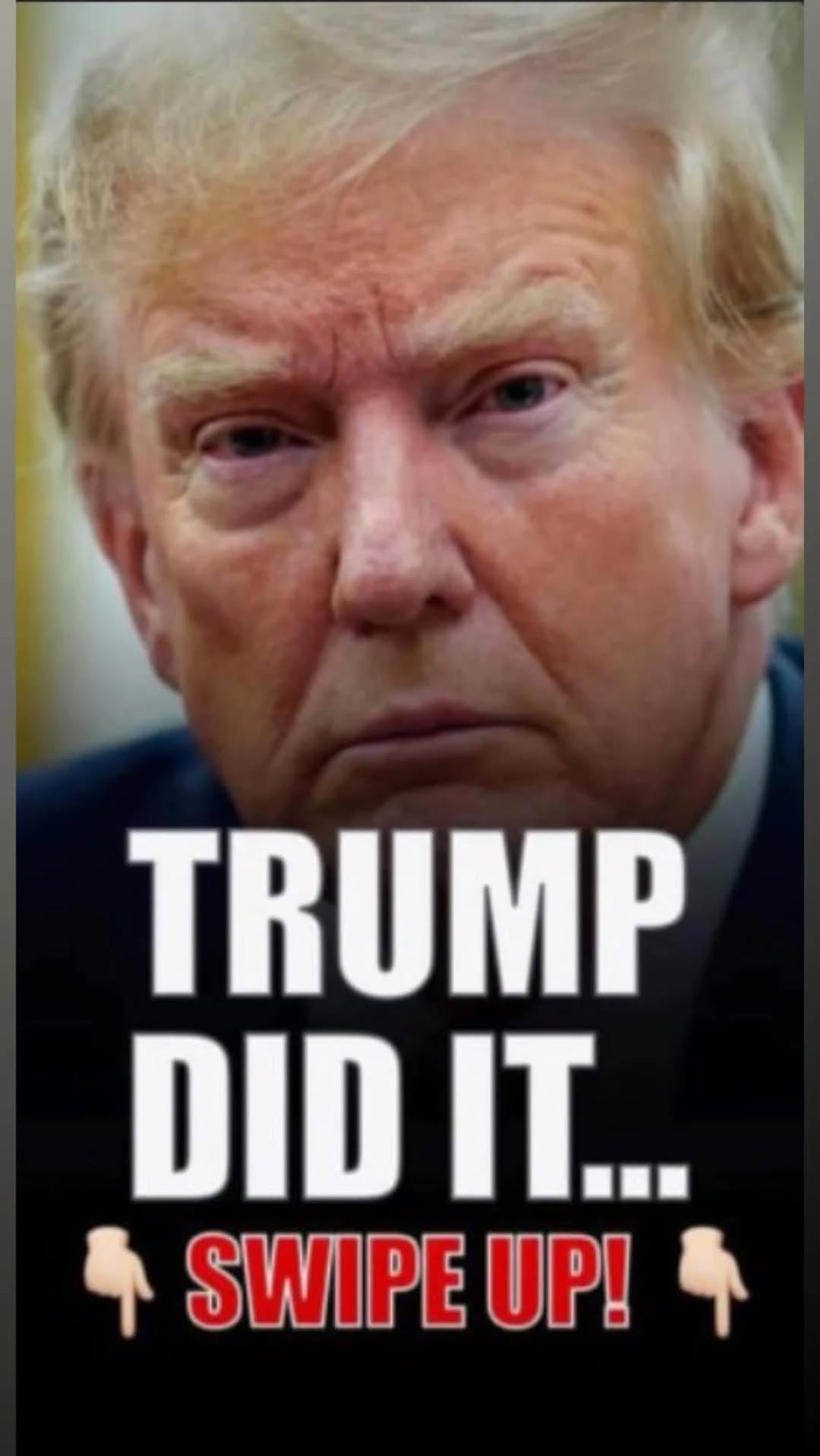

Donald Trump has tried to clarify controversy surrounding an AI-generated image he shared on Truth Social showing himself depicted as Jesus Christ, which he later deleted after it sparked backlash online.
The post reportedly caused anger among some supporters and Christian commentators, who called the image “blasphemous” and inappropriate, leading to widespread criticism.
When questioned by reporters, Trump addressed the situation and attempted to downplay the controversy, also shifting blame toward the media for amplifying the reaction.
The incident has drawn attention both for the unusual nature of the AI-generated image and for the strong responses it triggered before being removed.
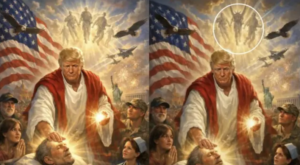
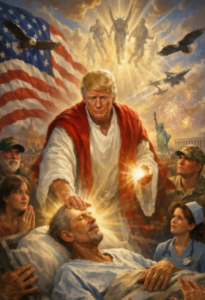
The AI-generated image shared on Donald Trump’s Truth Social account showed him in a highly stylized, almost religious-looking scene.
In the image, he appeared wearing flowing white and red robes while placing his hand on a hospitalized man’s forehead. Light was shown radiating from the patient, suggesting a healing or miraculous effect.
Behind him, the background included symbolic American imagery such as bald eagles, fighter jets, the Statue of Liberty, the Lincoln Memorial, and the U.S. flag. It also reportedly featured darker, horned figures in the sky that replaced earlier elements from a prior version of the image.
The post gained extra attention because of its timing, appearing shortly after Trump criticized Pope Leo XIV and was posted during Orthodox Easter, which intensified public reaction.
When asked about it, Trump said the image was meant to depict him “as a doctor” helping people, comparing it to a Red Cross-style humanitarian role. He insisted it was not meant to be religious or portray him as Jesus, and suggested the interpretation came from critics and the media rather than the intention behind the post.
The White House also downplayed the controversy, arguing the image did not contain explicit religious symbols like halos or stigmata.
Reactions to the post shared by Donald Trump were unusually intense—and notably, not limited to his usual political opponents.
A number of prominent conservative commentators and figures within the MAGA-aligned media ecosystem also criticized the image, calling it inappropriate and disrespectful. Some described it as crossing a religious line, arguing that the depiction felt like blasphemy or went too far in its symbolism.
Others questioned the judgment behind posting it at all, suggesting that it created unnecessary controversy and could alienate religious supporters who typically align with Trump. A few voices urged that the post should have been deleted immediately, saying there was no context in which it would be widely accepted.
Overall, the reaction was notable because it wasn’t just partisan backlash—it included criticism from supporters who normally defend him, turning the episode into a rare moment of internal disagreement within his political base.
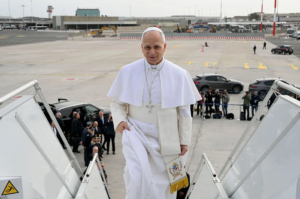
The fallout with Donald Trump and Pope Leo XIV began just before the controversial image even appeared.
Trump had already sparked tension by posting a sharp criticism of the Pope on Truth Social, claiming that without him, Leo “wouldn’t be in the Vatican,” and criticizing his stance on U.S. foreign policy and crime. He continued the criticism publicly later that day, telling reporters he was “not a fan” of the Pope and describing him as too liberal and ineffective on issues like crime.
Pope Leo, in contrast, responded calmly and avoided escalation. While traveling on a papal flight, he said he had “no fear” of the Trump administration and emphasized that he would not engage in public disputes, focusing instead on the Church’s mission.
The situation cooled at the Vatican level, with the Pope choosing restraint, while Trump’s comments—and the earlier image controversy—continued to generate political and media attention.
As for the image itself, it was later deleted from Trump’s Truth Social account, and no detailed official clarification was issued beyond Trump’s own remarks describing it as a depiction of himself as a doctor.