
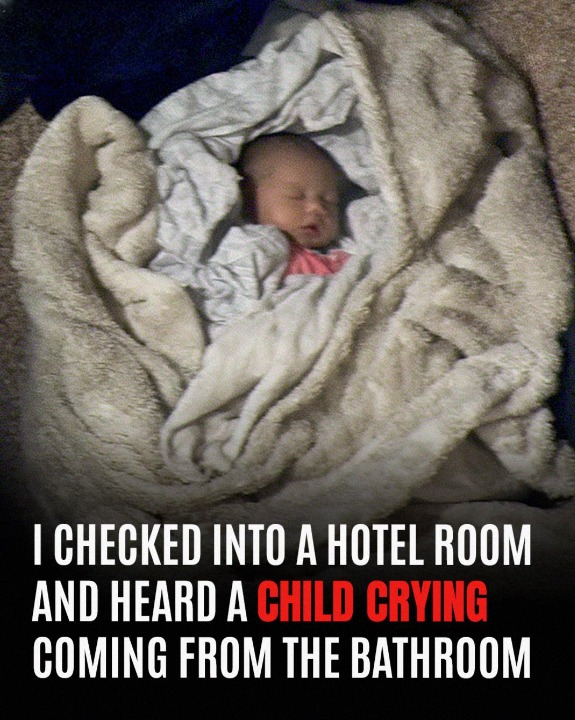
He checked into the hotel expecting nothing more than a few hours of rest before his evening meeting. But when he heard a child’s sobs coming from the next room, curiosity—and unease—drove him to investigate. What he found behind the bathroom door was something he could never have anticipated.
I arrived in the city early that afternoon for work. My meeting wasn’t until evening, so I checked into a hotel to drop off my bags and get some rest after a grueling five-hour drive. My neck ached, my eyes burned, and all I wanted was quiet.
The hotel was one of those business-style places pretending to feel warm: neutral walls, framed city photos, soft lobby music, and a lonely coffee station.
At the front desk, the manager, Marcus, handed me my key card. “Room 417,” he said, “let us know if you need anything.” A housekeeper named Elena was nearby, folding towels and barely glancing my way. I thought nothing of it.
The elevator moved slowly, and my room was at the end of a quiet hall. When I opened the door, the room seemed entirely normal—king bed, desk, armchair, TV, neat bathroom. Nothing stood out. If it had, maybe I would have been wary.
I lay down intending just a short rest. But the moment my head hit the pillow, I fell asleep instantly.
I woke abruptly. At first, I didn’t understand why—then I heard it. A soft, distant, unmistakable sound: a child crying. My heart raced.
I sat up, straining to listen. Perhaps it was pipes, or a neighboring room—hotels could play tricks on your ears. But the crying came again, coming unmistakably from the bathroom.
My legs felt weak. My skin went cold. I approached the bathroom slowly. Hand on the handle, I opened the door.
The bathroom was empty. Spotless. Towels neatly folded. Shower curtain pulled back. No child. Yet the sobbing continued, echoing off the tiles.
It was a recording.
A corner of the mirror was slightly misaligned. Pressing it, a narrow panel shifted, revealing a hidden phone playing the sobbing on loop. Behind the panel, I found a small compartment containing three tiny shirts, a bent stuffed rabbit, a broken toy truck, and a bundle of photos tied with pink ribbon—images of a little girl, smiling, laughing, even in that very bathroom.
Marcus and Elena entered shortly after. They explained that the room had belonged to a woman named Claire, who had lost her daughter and recreated memories in the room to feel close to her. The crying was her way of holding onto her child.
Curiosity overtook me. I checked the phone and saw a single contact labeled “If found.” I texted, and a reply came quickly: Claire. She explained that most people walk away after hearing the crying—but she had hoped someone might notice, might respond.
It was never about haunting. It was about seeing if someone would answer.
Sitting there, phone warm in hand, I realized the test had been passed. I hadn’t ignored it. And that simple action mattered.