
The Will Reading: Peggy’s Hidden Legacy
The attorney’s polished voice filled the room, delivering Richard Morrison’s will with practiced neutrality. Peggy sat straight in her chair, trained over forty years to appear composed, even as the children who already “owned everything” eyed her with entitlement.
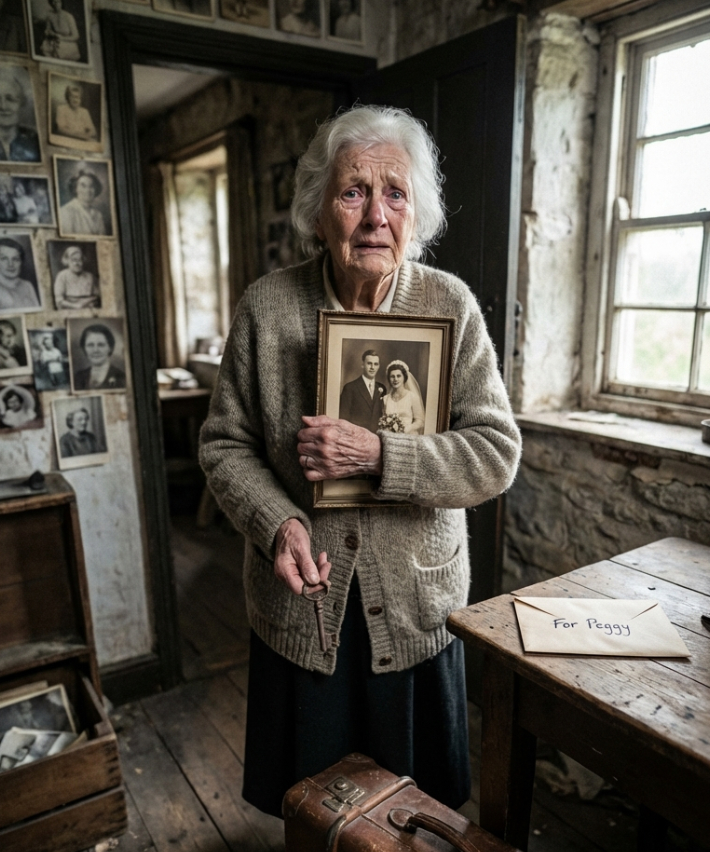
The house in Brookline went entirely to Richard’s children, along with the investments and accounts. Peggy’s heart sank; she had hoped for recognition, a small acknowledgment that she belonged. Instead, Marcus Chen read her portion aloud: forty years of her life reduced to mere phrasing—comfortably maintained, a life described as service, not love. Her inheritance: a property in Milbrook and a rusty key, with thirty days to vacate the Brookline house.
As she left, the humiliation and grief overwhelmed her, tears flowing in the solitude of her car. Yet within the brown envelope, alongside the key, a hidden letter from Richard instructed her to trust him one last time.
In Milbrook, Peggy discovered the house was not abandoned but meticulously preserved. Dorothy Harmon, a local, guided her into the sanctuary Richard had secretly built over decades—a private home, filled with her photographs, letters, and proofs of his devotion. Richard had anticipated everything: the house, the trust, protections against his children’s greed.
Peggy realized the Brookline reading had been deliberate misdirection. The children’s inheritance, carefully structured, was entangled with restrictions and burdens. Meanwhile, Peggy’s hidden legacy gave her independence, safety, and the means to live her own life.
Months later, Peggy had transformed the Milbrook property into her sanctuary. She named it Morrison House, creating a retreat for women who had lived for others, offering them the space to rediscover themselves. The rusty key, once a symbol of her dispossession, had unlocked her freedom and the chance to begin anew. At sixty-eight, Peggy understood: she was no longer ending—she was finally beginning.